Build
Digital products, applications and business systems.
Iron Signal Works
Independent technical partner for businesses that need to build, repair or modernise critical digital systems.
Technical thinking. Direct communication. Production-ready delivery. No unnecessary layers.
No obligation. No generic sales deck. No pressure to build something you don't need.
Is this for you
That's where Iron Signal Works comes in.
Problems we solve
Iron Signal Works helps businesses remove digital friction, reduce technical risk and build systems that are easier to operate.
Practical use case
People repeatedly copy data, update spreadsheets, move files and send status emails. We map the workflow and build the digital system that removes unnecessary human steps.
Practical use case
Law firms, accounting offices, property companies and other organisations can accumulate years of PDFs, scans and records. We turn document archives into structured, searchable information.
Practical use case
A website can still 'work' while performance, maintainability, accessibility, SEO or deployment quality quietly deteriorate. We measure first, then fix the highest-value problems.
Practical use case
CRM, ERP, ecommerce, spreadsheets and email often hold different versions of the same information. We design the data flow and automate the movement between systems.
Practical use case
A spreadsheet can become an unofficial application: customer data, orders, statuses, approvals and reports all living in files. We replace that dependency with a system designed for the workflow.
Practical use case
Critical software can become a liability when dependencies are old, deployments are fragile and system knowledge is concentrated in one person. We stabilise first, then modernise where it makes sense.
The work
Digital products, applications and business systems.
Existing applications, broken deployments, technical debt, performance issues, abandoned projects.
Move legacy infrastructure and workflows into something maintainable.
Automation, internal tooling, publishing systems, performance and operational workflows.
Business problem, technical intervention, delivered system.
A front-desk copilot that answers only from approved SOP manuals - and refuses when the corpus does not support an answer.
Front-desk teams need fast answers under pressure, but generic assistants improvise policy and make operations riskier.
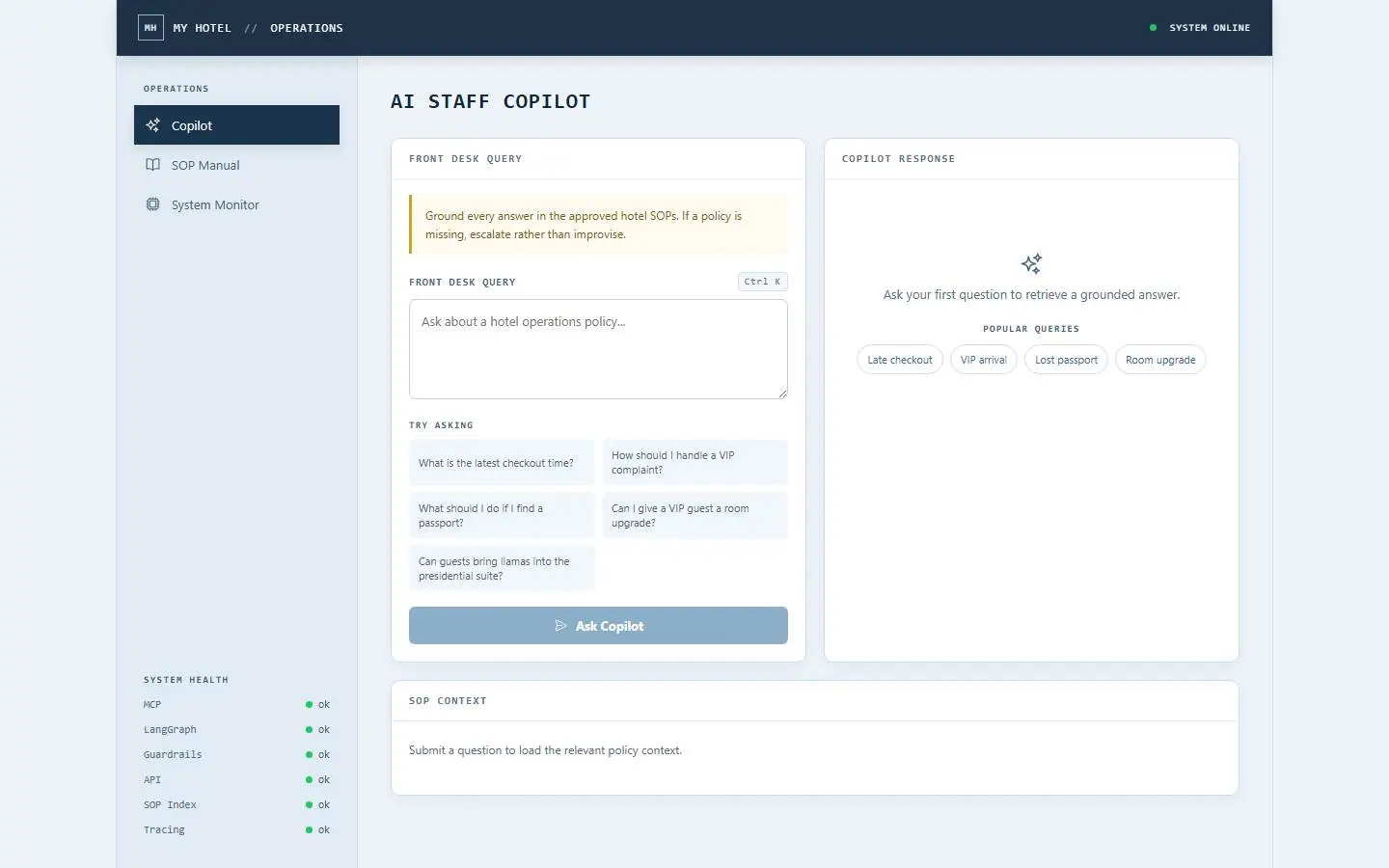
Delivered: grounded answers with cited SOP source, refusal path, PII masking before orchestration, request receipts, SOP browser, and a system monitor.
A lab-credible LIMS console so stakeholders can walk strain, QC and pipeline flows before any instrument is wired. All data is simulated.
Investors and lab partners could not judge the product from slides. Generic admin demos made the pitch feel fake.
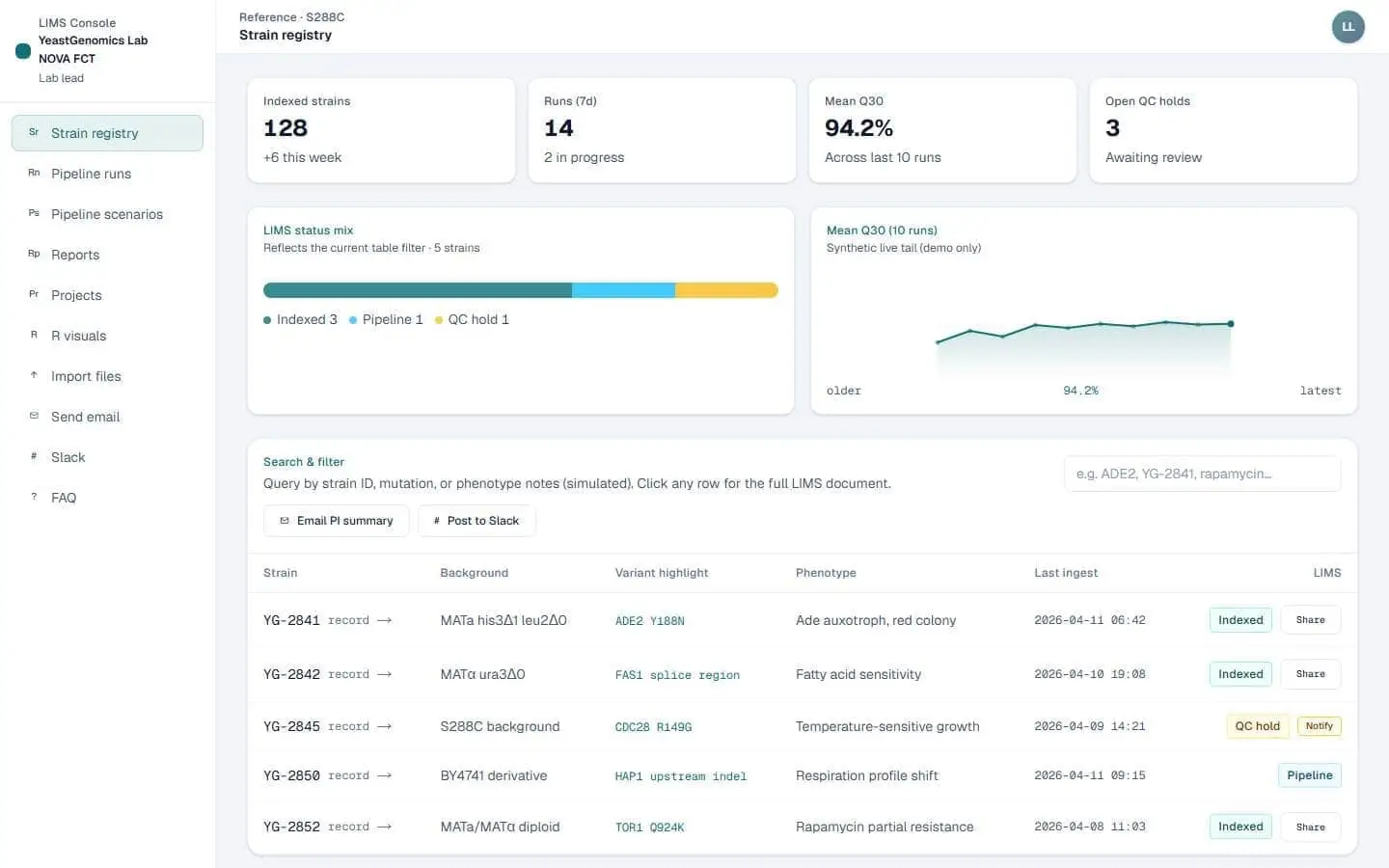
Delivered: operator console, pipeline schema view, simulated strain and QC states. Explicitly not connected to live sequencers or production databases.
Replacing inbox tabs, sticky notes and an unused PMS with one occupancy, messaging and guest-page surface. Interactive prototype on simulated data.
Staff hunted guest context across inbox tabs, sticky notes, and a slow enterprise PMS nobody wanted to open mid-shift.
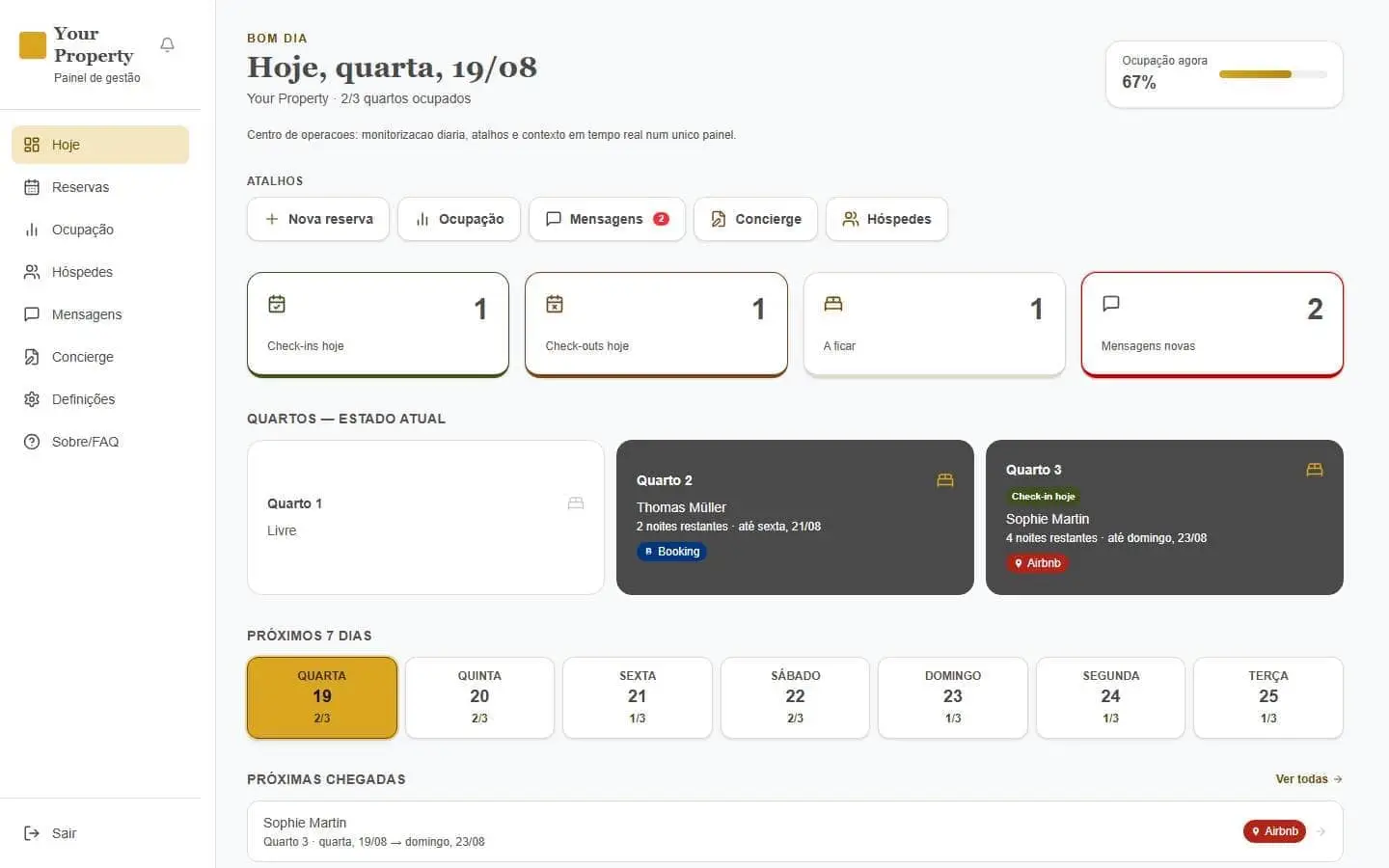
Delivered: Portuguese-first operations UI (today, rooms, seven-day strip, arrivals), messaging lane, micro-CMS. Browser prototype - not bound to live Gmail or channel APIs.
Replacing spreadsheet-and-tribal-knowledge compliance with a walkable Digital Product Passport for steel.
Compliance deadlines were closing in with nothing but spreadsheets and tribal knowledge to prove product provenance.
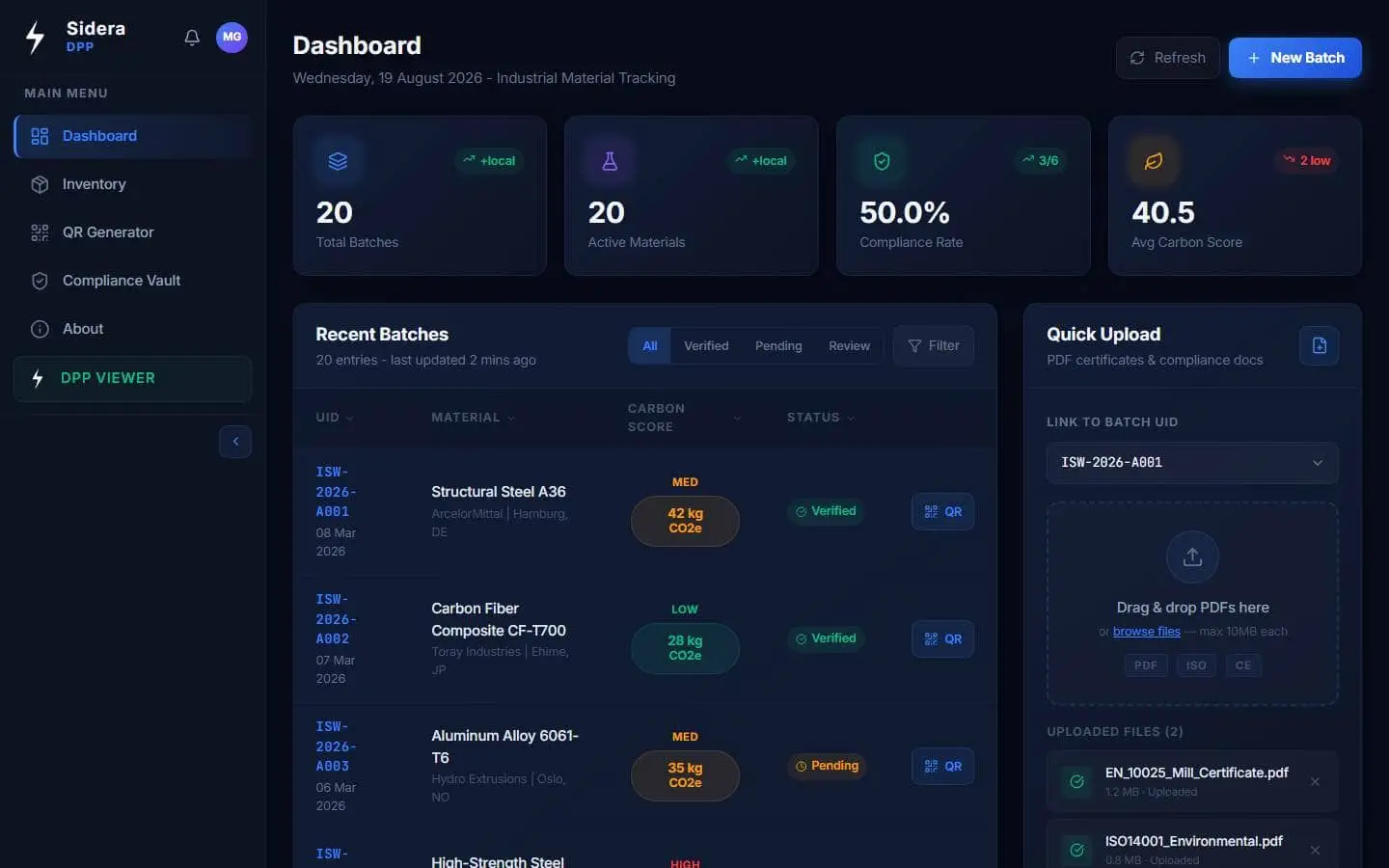
Delivered: six-pillar DPP operator UI (identity, materials, performance, traceability, circularity, compliance). Sample records - not wired to live plant systems.
Replacing fragmented publishing workflows with a controlled digital platform for a label and distro.
Publish nights meant double-entry catalog work, broken storefront updates, and leads that vanished before anyone followed up.
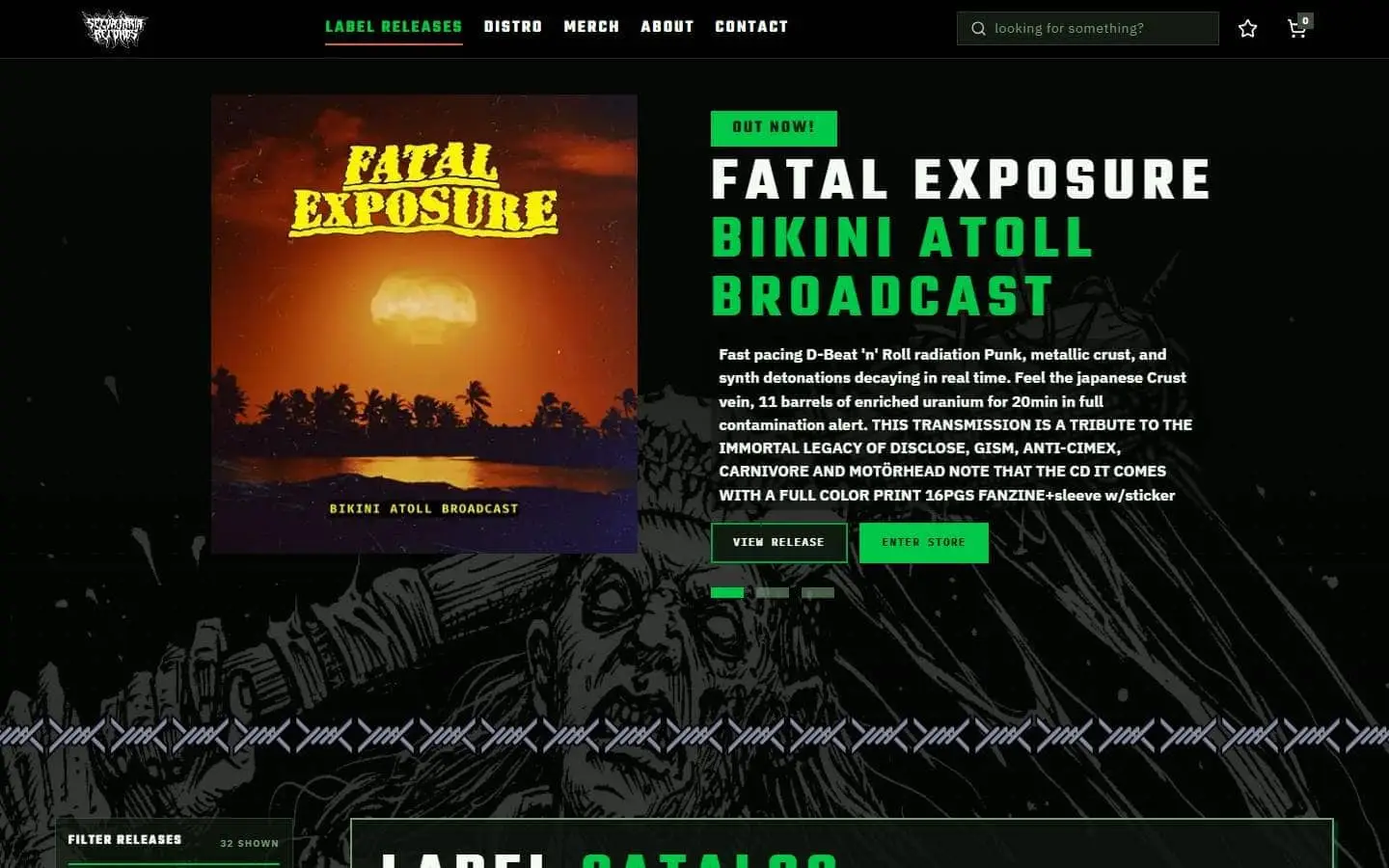
Delivered: CMS architecture, storefront, content modelling, server-side Sanity adapters, deployment pipeline, instrumentation, and handover. One source of truth for releases and distro listings.
A content-as-data game engine: encounters, cities and economy live in JSON so the product can change without a scene-graph rewrite.
Every gameplay tweak meant a code refactor. Designers could not retune a beat without engineering in the loop.
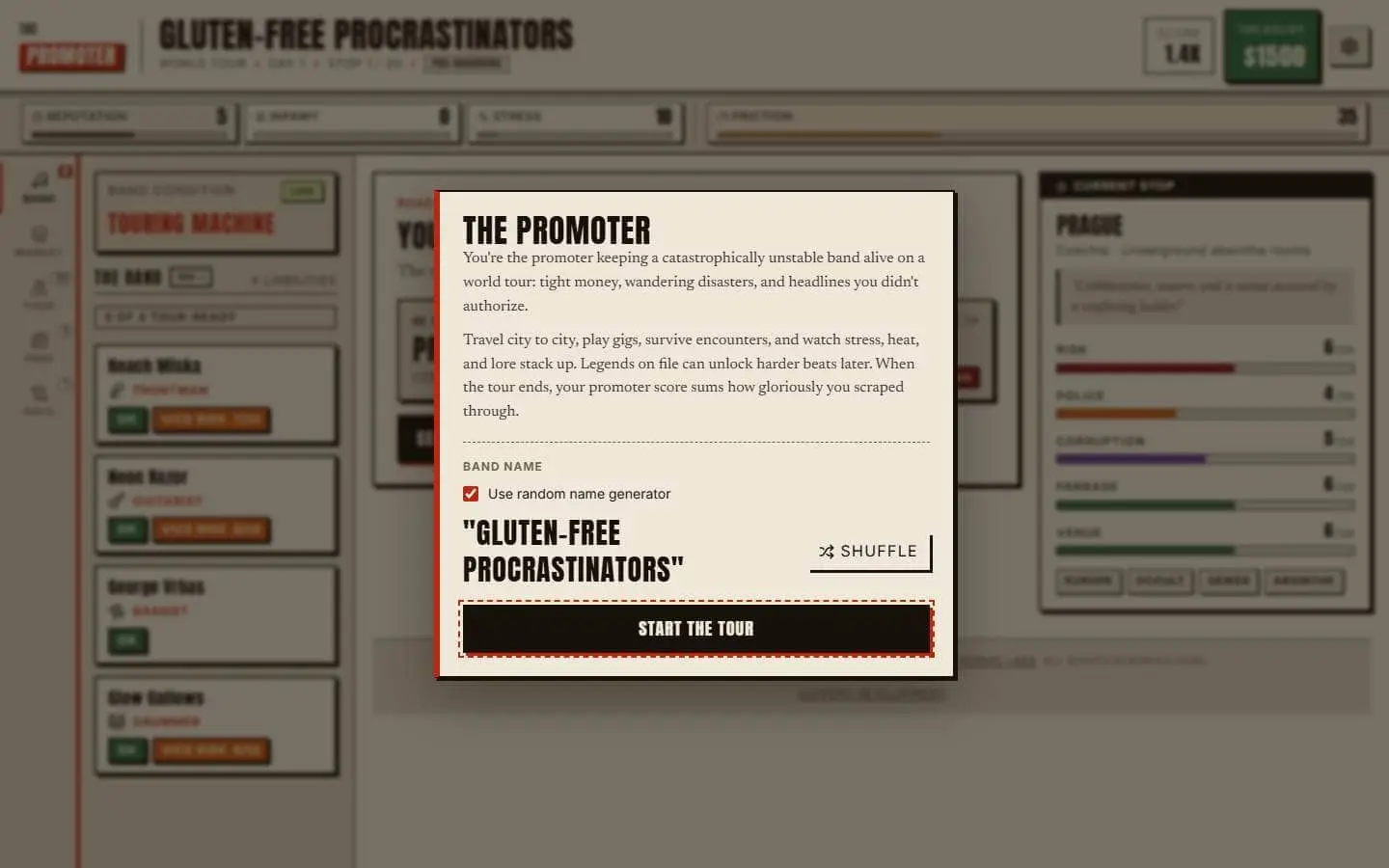
Delivered: JSON catalogs, applyEffect-only mutations, a React client and a seeded headless Vitest sim sharing one engine. Client-only; progress in localStorage.
How we work
The fifth step is the point: you keep the system. We are not trying to trap you into paying forever.
01
We examine the business problem, current systems, constraints and risks.
02
We define the simplest viable technical approach before unnecessary development begins.
03
Focused implementation with visible milestones and working deliverables.
04
Testing, performance, security, deployment and operational checks.
05
Documentation, source code, infrastructure access and knowledge transfer.
Commitments
You work directly with the person responsible for the project. No disappearing behind layers of account management.
What is being built, what isn't being built, and why.
Testing, deployment, monitoring, documentation and handover are part of delivery - not an afterthought.
Clients own their infrastructure, code and data.
Technology decisions are documented in plain language.
Every engagement should reduce complexity, not create more.
What clients say
Notes from recent projects.
The storefront and admin panel are finally aligned with our release rhythm. Publishing is far faster and more secure with the custom CMS.
They structured the passport data so compliance became a native product characteristic, not a spreadsheet attachment.
Clear scope, full transparency on progress, and a tightly integrated delivery our team took over with full autonomy. No surprises.
Artist pages and release flows were immediately production-ready. We stopped wasting time fighting CMS limitations.
The storefront and admin panel are finally aligned with our release rhythm. Publishing is far faster and more secure with the custom CMS.
They structured the passport data so compliance became a native product characteristic, not a spreadsheet attachment.
Clear scope, full transparency on progress, and a tightly integrated delivery our team took over with full autonomy. No surprises.
Artist pages and release flows were immediately production-ready. We stopped wasting time fighting CMS limitations.
Engineering standard
Every Iron Signal Works project follows a documented engineering standard - version control, environments, validation, testing appropriate to risk, accessibility, performance, security, deployment, monitoring, documentation, and handover.
Independent by design
We take an architecture-led approach to engineering, execution, and long-term maintainability: building clear, robust systems designed to grow with the business.
Systems Assessment
A focused technical review of an existing product, workflow or infrastructure. You receive a current-state assessment, technical risks, architecture recommendations, a priority roadmap, and estimated implementation scope.
The outcome is a clear technical decision - not a two-hour sales call.
Discuss your projectEngagements typically range from
€1k–€3k
Diagnostic / technical assessment
€3k–€10k+
Focused systems / applications / modernisation
€10k+
Larger products and operational platforms
After a system is in production, ongoing technical support typically runs €500–€1,500/month, scoped to that system.
Have a system that needs building, fixing or replacing?
Direct technical ownership. Clear decisions. Production-ready delivery.
Tell me what you're trying to build, what's currently breaking, or where your team is losing time. I'll determine whether Iron Signal Works is the right technical partner - and what the sensible next step looks like. Scopes sit in pricing & terms.